Tag Archives: music

(1884) The Foresters’ Egg! A Timely Warning!

This song was found in the Bristol Radical History pamphlet (#6) ‘The Life and Times of Warren James’ about the Forest of Dean enclosures:

Arouse ye, free miners, who delve in old Dean,
and all ye freeholders with rights o’er its green,
‘Tis time to be stirring for danger is nigh;
and if ye bestir not, you’ll find by and by,
that truth, and truth only, is this now I tell,
They’ll suck out the egg if they once prick the shell!

Say will you surrender, or barter away,
your Father’s old charter – twelve months and a day,
while yours, the bad bargain, to take what they please,
in rents and in taxes, in fines, and in fees.
Remember, free miners, yea, ponder it well,
They’ll suck out the egg if they once prick the shell!

Anon., The Foresters’ Egg! A Timely Warning!
Dean Forest Mercury, 23 may 1884

You can read more about this here – https://www.brh.org.uk/site/articles/pity-the-poor-buttyman/ and buy their excellent pamplets here – https://freedompress.org.uk/product/the-life-and-times-of-warren-james/

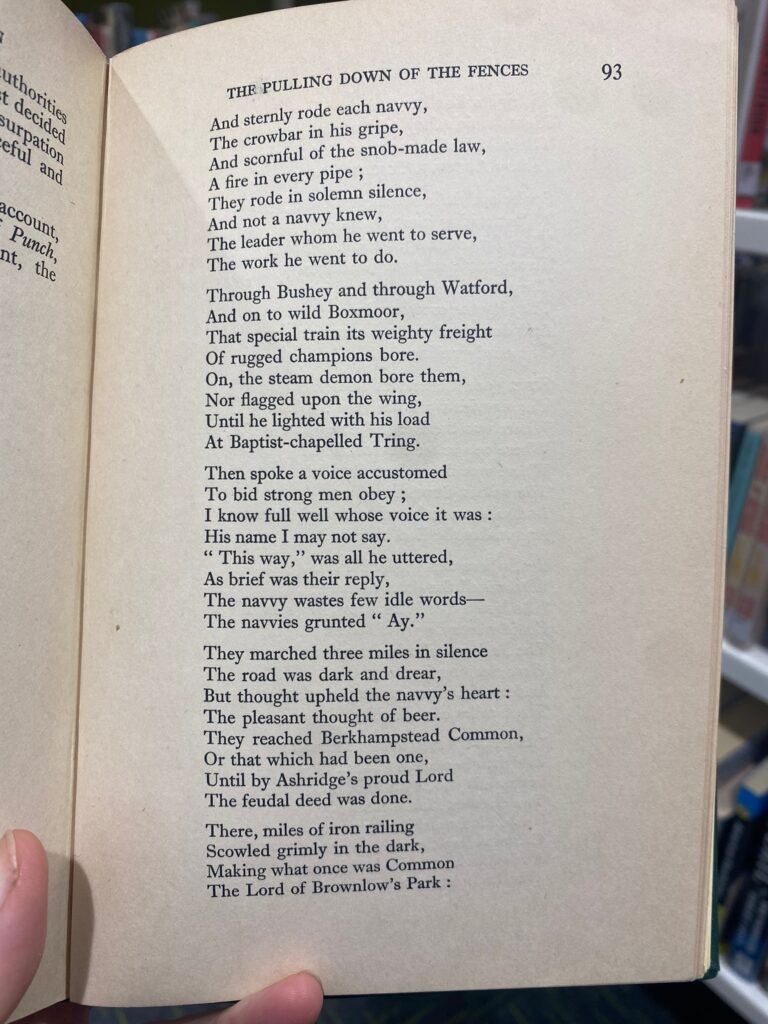
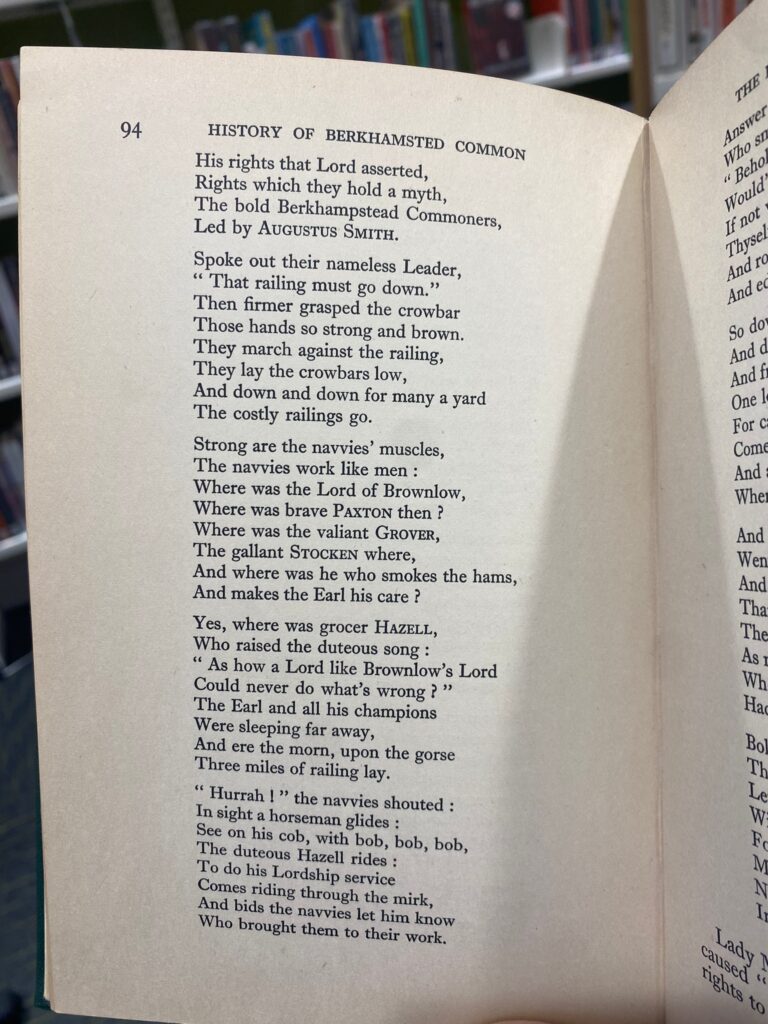
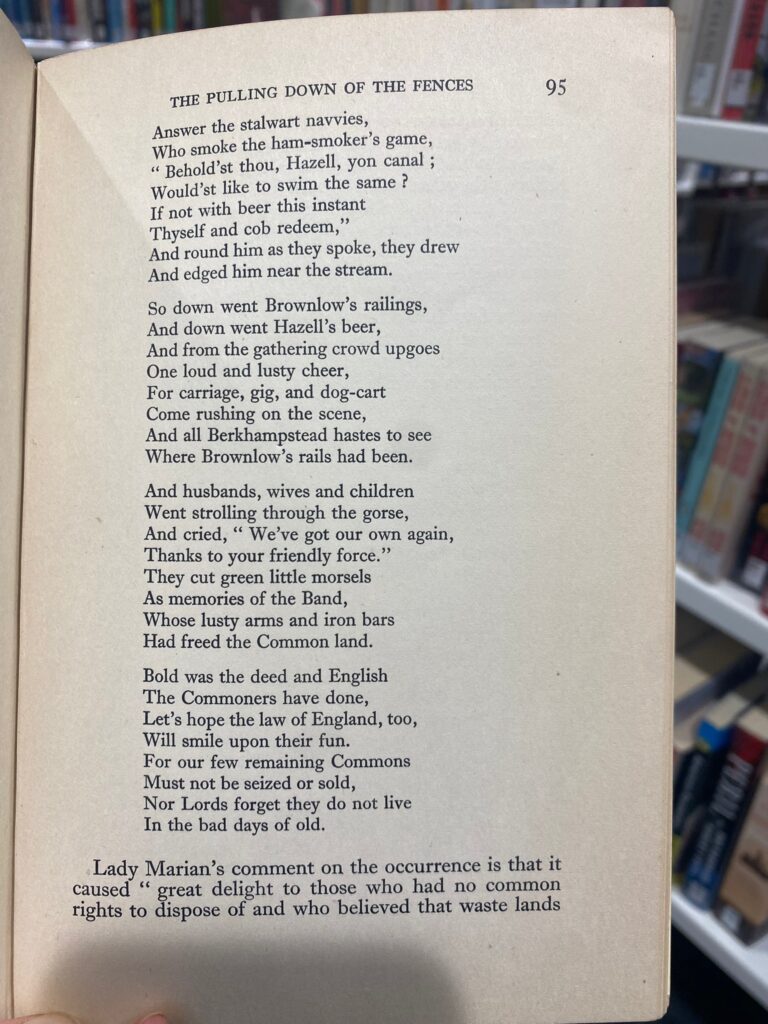
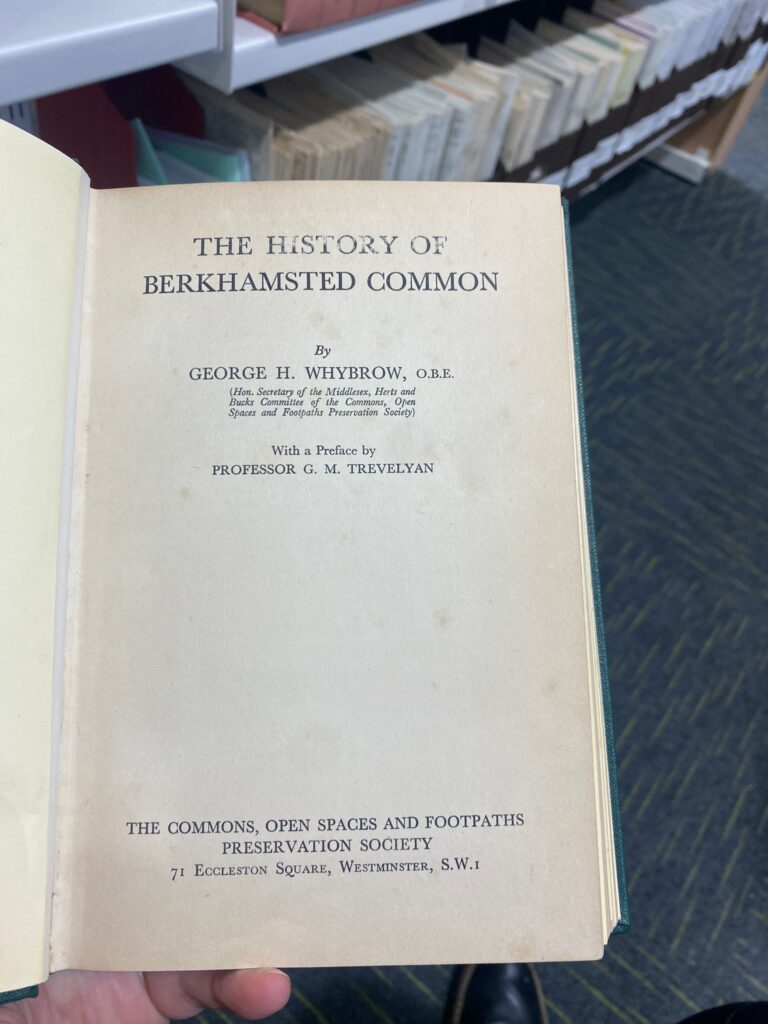
(1866) Ballad of Berkhamsted Common

In 1866, Lord Brownlow of Ashridge House tried to enclose a third of Berkhamsted Common by putting in iron fences “without any openings and entirely regardless of public rights of way”.

But the Commons Preservation Society got together a bunch of workmen and labourers to come up on a special midnight train from London and pulled all the fences out.

This is a delightful ballad which tells the story:

(1851*) The Ballad Of Crowfoot by Willie Dunn

Released in 1968 and often referred to as Canada’s first music video, The Ballad of Crowfoot was directed by Willie Dunn, a Mi’kmaq/Scottish folk singer and activist who was part of the historic Indian Film Crew, the first all-Indigenous production unit at the NFB. The film is a powerful look at colonial betrayals, told through a striking montage of archival images and a ballad composed by Dunn himself about the legendary 19th-century Siksika (Blackfoot) chief who negotiated Treaty 7 on behalf of the Blackfoot Confederacy. The IFC’s inaugural release, Crowfoot was the first Indigenous-directed film to be made at the NFB.

Lyrics


Comes the spring and its warm thaw
Around your neck, the eagle claw
Upon your head, the buffalo horn
Today a great new chief is born
So raise him fast towards the sun
A heart now beats, a life’s begun
It’s eighteen hundred twenty-one
Today a Blackfoot soul is, is born

Crowfoot, Crowfoot, why the tears?
You’ve been a brave man for many years
Why the sadness? Why the sorrow?
Maybe there’ll be a better tomorrow

Your years have gone, the years have past
Your heart is set, your soul is cast
You stand before the Council Fire
You have the mind and the desire
Of notions wise you speak so well
And in brave deeds you do excel
And it’s eighteen hundred fifty-three
And you stand the chief of Confederacy
You are the leader, you are the chief
You stand against both liar and thief
They trade braves whiskey and steal your land
And they’re coming in swift like the wind-blown sand
They shoot the buffalo and kill the game
And send their preachers in to shame
And it’s eighteen hundred sixty-four
And you think of peace and you think of war

Crowfoot, Crowfoot, why the tears?
You’ve been a brave man for many years
Why the sadness? Why the sorrow?
Maybe there’ll be a better tomorrow

See the settlers in more numbers
He takes whatever he encounters
You’ve seen the Sioux all battered, beaten
They’re all in rags, they haven’t eaten
The Nez Perce’ were much the same
It seems like such a heartless game
And it’s eighteen hundred seventy-six
And the enemy’s full of those death-dealing tricks
Today the treaty stands on the table
Will you sign it? Are you able?
It offers food and protection too
Do you really think they’ll hold it true?
It offers a reserve, now isn’t that grand?
And in return you cede all of your land
And it’s eighteen hundred seventy-seven
And you know the scales are so uneven

Crowfoot, Crowfoot, why the tears?
You’ve been a brave man for many years
Why the sadness? Why the sorrow?
Maybe there’ll be a better tomorrow

Well, the buffalo are slaughtered, there is nothing to eat
The government’s late again with the meat
And your people are riddled with the white man’s disease
And in the summer they’re sick and in the winter they freeze and
Sometimes you wonder why you signed that day
But they broke the treaties themselves anyway
And it’s eighteen hundred eighty-nine
And your death star explodes and then it falls

Crowfoot, Crowfoot, why the tears?
You’ve been a brave man for many years
Why the sadness? Why the sorrow?
Maybe there’ll be a better tomorrow

The years have gone, the years have flown
A nation since has swiftly grown but
Yet for the Indian, it’s all the same
There’s still the hardship, there’s still the pain
There’s still the hardship, there’s still the strife
It’s bitterness shines like a whetted knife
There’s still the hypocrisy, and the hate
Was that in the treaties? Was that the fate?
We’re all unhappy pawns in the government’s game
And it’s always the Indian who gets the blame
It’s a problem which money can never lessen
And it’s nineteen hundred sixty-seven

Crowfoot, Crowfoot, why the tears?
You’ve been a brave man for many years
Why the sadness? Why the sorrow?
Maybe there’ll be a better tomorrow

Maybe one day you’ll find honesty
Instead of the usual treachery
Perhaps one day the truth shall prevail
And the warmth of love which it does entail
Crowfoot, Crowfoot, why the tears?
You’ve been a brave man for many years
Why the sadness? Why the sorrow?
Maybe there’ll be a better tomorrow

(1960) Freedom Come All Ye by Hamish Henderson

I was told about Hamish Henderson a few weeks ago and just spent a delightful hour making friends with his best known song ‘Freedom Come All Ye’.

There have been a few translations into English but I didn’t really like any of them so I’ve written my own, building on unattributed previous efforts. It’s such a shame that ‘down’ and ‘bloom’, and ‘more’ and ‘bare’ don’t rhyme in my southern English accent!

Hamish Henderson – Freedom Come All Ye

Original scots:

Roch the wind in the clear day’s dawin
Blaws the cloods heilster-gowdie owre the bay
But there’s mair nor a roch wind blawin
Thro the Great Glen o the warld the day

It’s a thocht that wad gar oor rottans
Aa thae rogues that gang gallus fresh an gay
Tak the road an seek ither loanins
Wi thair ill-ploys tae sport an play

Nae mair will our bonnie callants
Merch tae war when oor braggarts crousely craw
Nor wee weans frae pitheid an clachan
Mourn the ships sailin doun the Broomielaw

Broken faimlies in lands we’ve hairriet
Will curse ‘Scotlan the Brave’ nae mair, nae mair
Black an white ane-til-ither mairriet
Mak the vile barracks o thair maisters bare

Sae come aa ye at hame wi freedom
Never heed whit the houdies croak for Doom
In yer hoos aa the bairns o Adam
Will find breid, barley-bree an paintit rooms

When Maclean meets wi’s friens in Springburn
Aa thae roses an geans will turn tae blume
An the black lad frae yont Nyanga
Dings the fell gallows o the burghers doun.

Robin’s English translation/adaptation*

Rough the wind in the clear day’s dawning
Blows the clouds topsy-turvy about the bay,
But there’s more than a rough wind blowing
Through the great glen of the world today.

It’s a thought that will make our tyrants
(Rogues who fancy themselves so fine and gay)
Take the road, and seek other pastures
For their ill ploys to sport and play

No more will our bonnie callants
March to war when our braggarts crudely caw,
Nor wee ones from pit-head and hamlet
Mourn the ships sailin’ down the Broomielaw.

Broken families in lands we’ve harried,
Will curse ‘Scotland the Brave’ no more, no more;
Black and white, hand in hand together,
Will drive the tyrants from each and every shore

So come all ye at home with freedom,
Never heed the cronies croak for doom.
In your house all the bairns of Adam
Will find bread, barley-bree and painted rooms.

When MacLean meets with friends in Springburn
Sweet the flowers will bloom that day for thee
And a black boy from old Nyanga
Will break his chains and know true liberty

* There are a few places where I have chosen to use different but congruent imagery that will speak more immediately to modern English speaking listeners and singers whilst also keeping the overall shape, meaning and rhyming structure intact.

As a result this is considered an adaptation as much as a translation, coming from a place of really wanting to find an authentic way to sing this song I love in my own voice.

I have left in a few Scots words like ‘bonnie callants’ as the surrounding lyrics make it easy for the singer or listener to understand the meaning.

(1846) The Blackstone-Edge Song by Ernest Jones

Blackstone Edge is the site of a famous Chartist gathering where Ernest Jones addressed 30,000 people on 2nd August 1846 – every year people still gather here to sing this song (and a few others!): https://www.youtube.com/watch?v=86orh7GOLcs – you can find more about this annual gathering here – http://blackstoneedgegathering.org.uk/?page_id=12

To the tune of ‘Battle of Hohenlinden’ –

O’er plains and cities far away,
All lorn and lost the morning lay,
When sunk the sun at break of day,
In smoke of mill and factory.

But waved the wind on Blackstone height
A standard of the broad sunlight,
And sung, that morn, with trumpet might,
A sounding song of Liberty.

And grew the glorious music higher,
When pouring with his heart on fire,
Old Yorkshire came, with Lancashire,
And all its noblest chivalry.

The men, who give,—not those, who take;
The hands, that bless,—yet hearts that break;
Those toilers for their foemen’s sake;
Our England’s true nobility!

So brave a host hath never met,
For truth shall be their bayonet,
Whose bloodless thrusts shall scatter yet
The force of false finality!

Though hunger stamped each forehead spare,
And eyes were dim with factory glare,
Loud swelled the nation’s battle prayer,
Of—death to class monopoly!

Then every eye grew keen and bright,
And every pulse was dancing light,
For every heart had felt its might
The might of labour’s chivalry.

And up to Heaven the descant ran,
With no cold roof ‘twixt God and man,
To dash back from its frowning span,
A church prayer’s listless blasphemy.

How distant cities quaked to hear,
When rolled from that high hill the cheer,
Of—Hope to slaves! to tyrants fear!
And God and man for liberty!

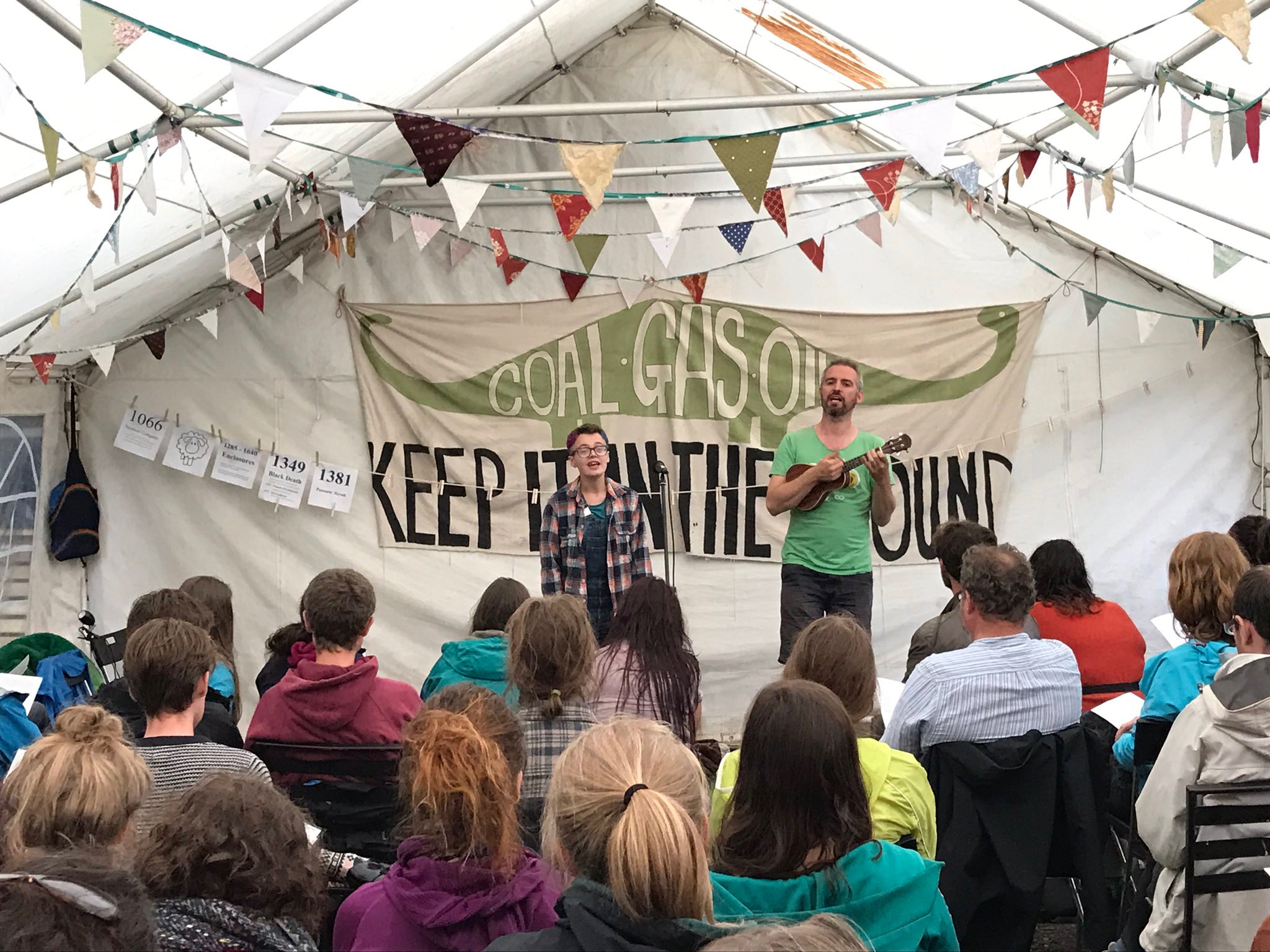
Marking the 800th anniversary of the 1217 Charter Of The Forest in Sherwood Forest with a sing-a-long

Robin and Roo will be leading a sing-a-long this Sunday by The Major Oak in Sherwood Forest to mark the 800th anniversary of the 1217 Charter Of The Forest and linking this to land rights, fracking and universal basic income in our present day.

https://www.facebook.com/events/530204757394442/

What’s the Charter Of The Forest, I hear you say… see hear for more information… https://thenewputneydebates.com/

(1830) Owslebury lads

Lovely track about the Swing Riots

In 1830, on November the 23rd, there was a riot in Owslebury. This was part of the wave of discontent among agricultural workers which had spread across southern England and expressed itself as the Swing Riots. A large mob formed and moved from farm to farm demanding money and threatening to destroy agricultural machinery. At Rosehill they assaulted Lord Northesk’s steward, Moses Stanbrook, wrecked a winnowing machine, and extorted £5. John Boyes, a local farmer, accompanied the mob demanding that farmers and landlords sign an undertaking which read “We, the undersigned, are willing to give 2s. per day to our married labourers, and 9s. per week to single men, in consideration of having our rent and tithes abated in proportion”. At Marwell Hall the lady of the house, Mrs. Alice Long, gave the mob £5 and signed John’s document. Eventually the mob retreated to Owslebury Down. Nine people had signed John Boyes’ document.

The rioters were tried in Winchester at the end of the year and several were executed. There was a good deal of sympathy for John Boyes and he was twice acquitted before eventually being found guilty and sentenced to be transported to Van Diemen’s Land for seven years. The trials were reported in The Times in December 1830 and January 1831. John Boyes did not complete his sentence. In 1835 the Home Secretary, Lord Melbourne, pardoned him and he returned home to his wife, Faith, and their children, in June of that year to continue farming in Owslebury. He died in Hensting in 1856.

(2017) Let’s Lock Ourselves Here For A While

We had the pleasure of singing for Frack Free Lancashire and Reclaim The Power on Friday. During the show, Robin had an excuse to teach the audience a song he wrote for Newham Woodcraft Folk group last year called ‘Let’s Lock Ourselves Here For A While‘. Here are the lyrics and a recording so anyone who wants to learn it can:


D G
I’ve a hundred old bike locks and they won’t undo
A D
Any idea who I could give them to?
D G
It’s a nice sunny day in the countryside
A D
Lets lock ourselves here for a while

So sorry Mr Big Truck what is that you say
Something quite cross about us being in your way
The birds are enjoying the day from the trees
Lets lock ourselves here for a while

No we ain’t going nowhere, let’s climb up the trees
Someone must stick up for the birds and the bees
The poor have no lawyers, the trees have no rights
Lets lock ourselves here for a while

Mr blue badge and truncheon is also upset
Doesn’t seem that grace has quite got to him yet
Filmed by a smart phone as he beats up Dave
who locked himself here for a while

They arrested our Caroline it made the lead news
One day the greens will out number the blues
Well in the meantime we’ll do what we must
Lets lock ourselves here for a while

Chorus

Mr suit and tie construction has a seat in the Lords
Our tattered democracy just filed for divorce
One day the people will speak out as one
until then we’ll be locked here a while

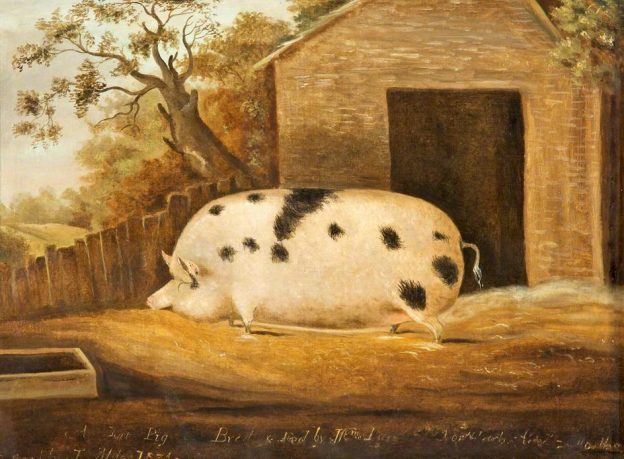
(1809) Petition of the Pigs in Kent

More info at a folk song a week blog – https://afolksongaweek.wordpress.com/2013/08/10/week-103-petition-of-the-pigs-in-kent/

Original text in 1809 magazine can be found here

Petition of the Pigs in Kent

Ye owners of woodlands, with all due submission,
We humbly beg leave to present our petition,
That you will be pleas’d to recall your decree,
Which tells us that acorns no longer are free.

In Sussex and Surrey and Middlesex too,
Pigs may ramble at large without such ado;
And why, then, in Kent should pretences be found,
To drive us like culprits and thieves to the pound,

Since we, and our fathers, and others before ‘em,
Have rang’d in your woods, with all proper decorum?
No poachers are we, for no game we annoy
No hares we entrap, and no pheasants decoy;

Contented are we, if an acorn we find,
Nor wish for a feast of a daintier kind.
Besides, we are told (and perhaps not mistaken)
That you and your friends love a slice of good bacon;

But if of good bacon you all love a slice,
If pigs are to starve, how can bacon be nice?
For these and for other wise reasons of state,
We again our petition most humbly repeat,

Ye owners of woodlands, with all due submission,
We humbly beg leave to present our petition,
That you will repeal this severest of laws,
So your woods shall resound to our grunting applause.

Singing history pdf’s by Sing London and EFDSS

Some good stuff in these PDF’s by Sing London

https://www.efdss.org/efdss-education/resource-bank/resources-and-teaching-tools/singing-histories

Just currently looking at the ‘Petition of the Pigs in Kent’ ballad from the Kent book… https://media.efdss.org/resourcebank/docs/EFDSS_Education_RecentProjects_SingingHistoriesKent.pdf

(1790*) Smile In Your Sleep by Jim McLean

Ewan McLennan just suggested this song ‘Smile In Your Sleep‘ to me, written by Jim McLean about the Highland Clearances.

Beautiful and achingly sad, I personally wonder if it needs another few verses, as I felt from The Cheviot The Stag and The Black Black Oil, that there were a number of defiant pockets of (mostly female) resistance to the Clearances which this song doesn’t touch on.

Hush, hush, time tae be sleepin
Hush, hush, dreams come a-creepin
Dreams o peace an o freedom
Sae smile in your sleep, bonnie baby

Once our valleys were ringin
Wi sounds o our children singin
But nou sheep bleat till the evenin
An shielings stand empty an broken

We stood, wi heads bowed in prayer
While factors laid our cottages bare
The flames fired the clear mountain air
An many lay dead in the mornin

Where was our fine Highland mettle,
Our men once sae fearless in battle?
They stand, cowed, huddled like cattle
Soon tae be shipped owre the ocean

No use pleading or praying
All hope gone, no hope of staying
Hush, hush, the anchor’s a-weighing
Don’t cry in your sleep, bonnie baby

Ewan MacColl – Bring The Summer Home – 1381 The Great Revolt

Peggy Seeger also sent over this track called ‘Bring The Summer Home’ from Ewan MacColl’s 1998 reissue compilation album Antiquities.

It is about the Peasants’ Revolt (or the Great Revolt as it should be know!), the 100 Year War with France, the first attempt at an English Poll Tax and the Black Death.

Someone on the Mudcat forums has a bash at working out the lyrics here – http://mudcat.org/thread.cfm?threadid=141748.

You can hear it online via this youtube mix tape…

Farmerama at the Oxford Real Farming Conference (30 mins)

This podcast features some songs from the singers circle we ran at the Oxford Real Farming Conference in 2016. It includes the wonderful Ed Hamer singing the Farmer’s ABC!

Do check it out (episode #6) via http://farmerama.co/

Farmerama

Summer Youth Residency

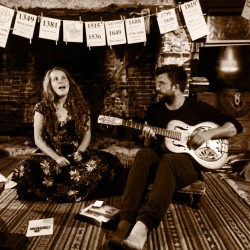
Toby and Georgie sing a duet

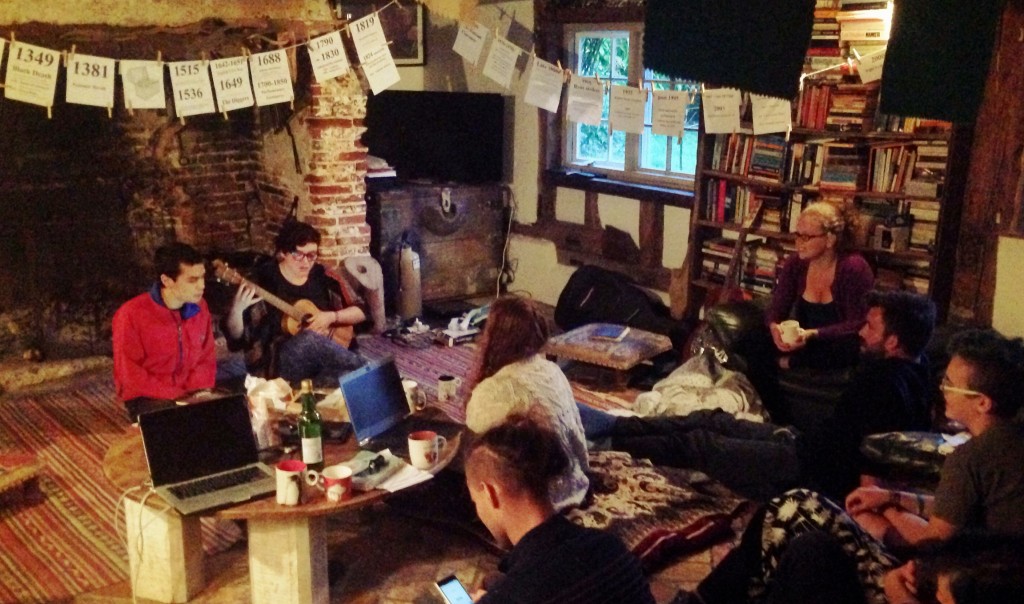
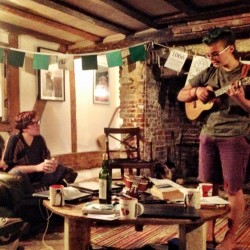
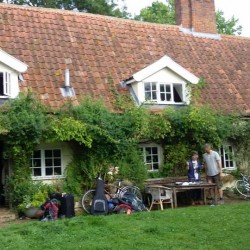
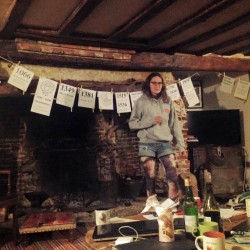
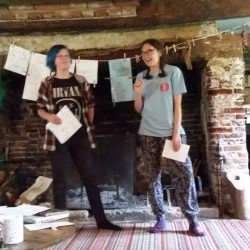
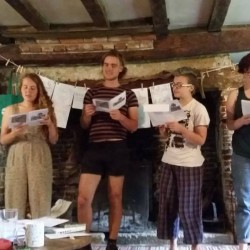
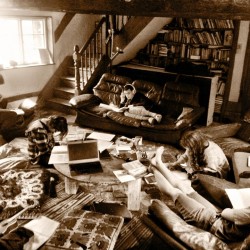
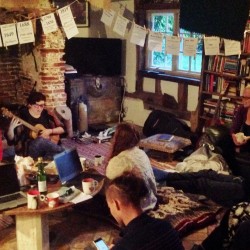
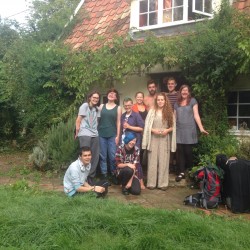
Way back in warm, sunny August, seven young people gathered somewhere in the depths of the East of England; the outskirts of a town called Diss (plenty of puns were made) in a lovely cottage, previously home to the writer Roger Deakin.

Five of us were from the youth organisation Woodcraft Folk, and we were glad to be joined by Molly and Kathleen who we hadn’t met before but quickly made friends with.

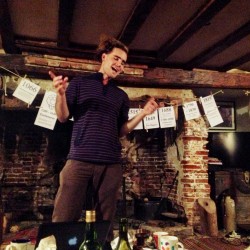
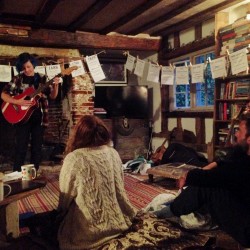
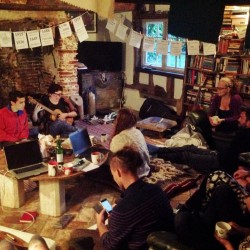
We were joined by Robin and Rachel and spent the week reading, singing and learning all about the history of our land and the struggles that have been fought for it. We listened to podcasts, taught each other songs and shared food together between practicing sections of the show ready for a performance.

At the end of the week, we performed a full show of Three Acres and a Cow as a group, complete with poetry, sketches and, of course, singing.

Since the residency, Anna has successfully applied for funding to develop a Quaker version of the show alongside Robin, and I have been involved in various performances of the show in my new role as youth apprentice.

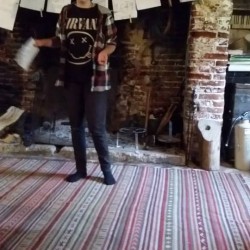
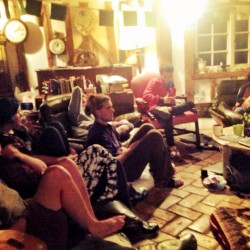
Here is a selection of photos from the week:

– Naomi, apprentice of Three Acres And A Cow

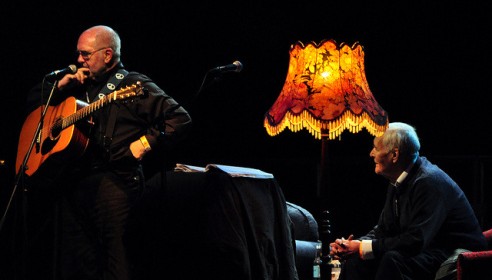
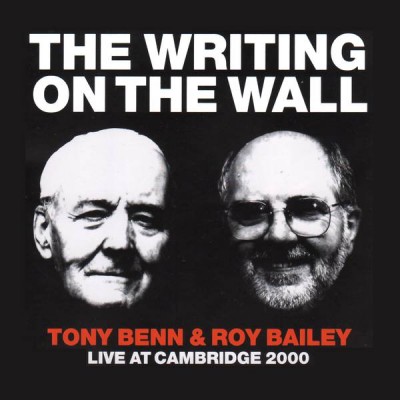
Tony Benn and Roy Bailey’s show ‘The Writing on the Wall’

roy and tony

Tony Benn and Roy Bailey used to tour a show called ‘The Writing on the Wall’ which has much overlap with the spirit, content and format of ‘Three Acres And A Cow’.

There is a newspaper review of one of the shows here and it can be found on iTunes, Spotify and many other virtual and real places… You might be able to stream it from the player below if you are lucky!

More info on Roy Bailey’s website but he has sold out of cds! http://roybailey.net/shop/items/writing-on-the-wall


thewritingonthewall_cfcd405

(1887) The Land Song

“The song became a Liberal radical anthem in the aftermath of David Lloyd George’s “people’s budget” of 1909 which proposed a tax in land. During the two general elections of the following year, ‘The Land Song’ became the governing Liberals’ campaign song.” (from https://en.wikipedia.org/wiki/The_Land_song)

More info can be found via – https://www.historyworkshop.org.uk/the-land-song/

Sound the blast for freedom, boys, and send it far and wide,
March along to victory, for God is on our side,
While the voice of nature thunders o’er the rising tide:
“God made the land for the people”.

The land, the land, ’twas God who made the land,
The land, the land. The ground on which we stand,
Why should we be beggars with the ballot in our hand?
God gave the land to the people.

Hark! The shout is swelling from the east and from the west!
Why should we beg work and let the landlords take the best?
Make them pay their taxes for the land, we’ll risk the rest!
The land was meant for the people.

The banner has been raised on high to face the battle din,
The army now is marching on, the struggle to begin,
We’ll never cease our efforts ’til the victory we win,
And the land is free for the people.

Clear the way for liberty, the land must all be free,
Britons will not falter in the fight tho’ stern it be.
‘Til the flag we love so well shall wave from sea to sea,
O’er the land that’s free for the people.

(1932) Manchester Rambler by Ewan MacColl

Ewan MacColl was on the first Kinder Scout trespass and wrote this amazingly catchy tune inspired by the experience.

From http://www.kindertrespass.com/

In April 1932 over 400 people participated in a mass trespass onto Kinder Scout, a bleak moorland plateau, the highest terrain in the Peak District.

The event was organised by the Manchester branch of the British Workers Sports Federation. They chose to notify the local press in advance, and as a result, Derbyshire Constabulary turned out in force. A smaller group of ramblers from Sheffield set off from Edale and met up with the main party on the Kinder edge path.

Five men from Manchester, including the leader, Benny Rothman, were subsequently jailed.

75 years later the trespass was described as: “the most successful direct action in British history” by Lord Roy Hattersley.

April 2012 saw the 80th Anniversary of the mass trespass of Kinder Scout celebrated by a week of walks, talks, and exhibitions, with a launch ceremony featuring Mike Harding, Stuart Maconie, and the leaders of major agencies involved in access to countryside. A new book was published, and commemorative posters are on sale.

The trespass is widely credited with leading to:

  • legislation in 1949 to establish the National Parks.
  • contributing to the development of the Pennine Way and many other long distance footpath.
  • securing walkers’ rights over open country and common land in the C.R.O.W. Act of 2000.

The trespass was controversial at the time, being seen as a working class struggle for the right to roam versus the rights of the wealthy to have exclusive use of moorlands for grouse shooting.

The Manchester Rambler by Ewan MacColl

I’ve been over Snowdon, I’ve slept upon Crowdon
I’ve camped by the Waynestones as well
I’ve sunbathed on Kinder, been burned to a cinder
And many more things I can tell
My rucksack has oft been me pillow the heather has oft been me bed
And sooner than part from the mountains,
I think I would rather be dead

I’m a rambler, I’m a rambler from Manchester way
I get all me pleasure the hard moorland way
I may be a wageslave on Monday but I have my freedom on Sunday

The day was just ending and I was descending
Down Grinesbrook just by Upper Tor
When a voice cried “Hey you” in the way keepers do.
He’d the worst face that ever I saw
The things that he said were unpleasant, in the teeth of his fury I said
“Sooner than part from the mountains, I think I would rather be dead”

He called me a louse and said “Think of the grouse”,
Well i thought, but I still couldn’t see
Why all Kinder Scout and the moors roundabout
Couldn’t take both the poor grouse and me
He said “All this land is my master’s”, at that I stood shaking my head
No man has the right to own mountains any more than the deep ocean bed

So I’ll walk where I will over mountain and hill
And I’ll lie where the bracken is deep
I belong to the mountains, the clear running fountains,
Where the grey rocks rise ragged & steep
I’ve seen the white hare in the gullys and the curlew fly high overhead
And sooner than part from the mountains, I think I would rather be dead.
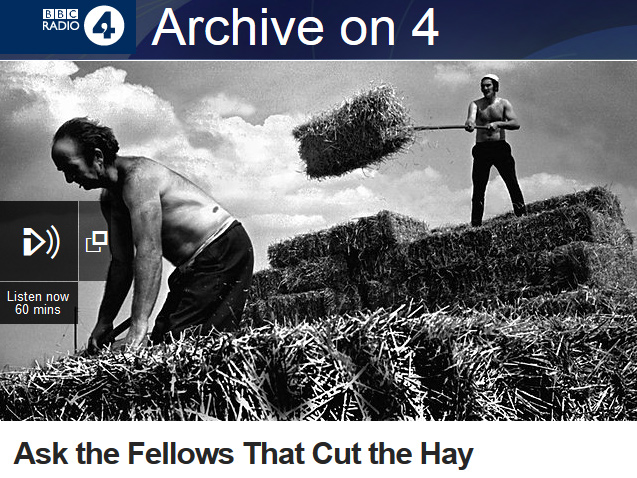
Ask the Fellows That Cut the Hay (60 mins)

fellows-hayIn this BBC Archive On Four, historian Alan Dein celebrates the centenary of his mentor George Ewart Evans, collector of Suffolk farming tales. Evans began by chatting to his neighbours over the fireside in the 1950’s and transcribing stories about poaching, shepherding, smuggling and ditching.

http://www.bbc.co.uk/programmes/b00rv8yk

The talk was of a hardscrabble life, of leaky roofs and meals of pea soup and pollard dumplings and beef only at Christmas with occasional festivities like the Whitsun fair.

Evans came from a Welsh mining village and he sympathised with the labourers’ stories about the tyranny of the trinity of the parson, squire and farmer. He was a sympathetic listener who asked allowed his community to speak for itself and he captured the stories of people whose traditions had been unbroken for generations, who worked on the land before mechanisation and who believed in magic and folk wisdom and had intuitive understanding of working with animals.

Evans’ eleven books about the working lives and folk stories of Blaxhall are a portrait of every facet of his village and paved the way for books and programmes, both fiction and not fiction, about British agricultural life.