Tag Archives: song

The Cottagers Complaint – Anti-enclosure ballad from Sutton-Coldfield

The full title is ‘The Cottager’s Complaint, on the Intended Bill for Enclosing Sutton-Coldfield’ and it was written by John ‘Poet’ Freeth (1731-1808) the owner of Freeth’s Coffee House in Birmingham and a well known poet and songwriter. He published a book called ‘The Political Songster: Or, a Touch on the Times, on Various Subjects, and Adapted to Common Tunes’ which went to at least 6 editions.


How sweetly did the moments glide, how happy were the days!
When no sad fear my breast annoyed, or e’er disturbed my ease;

Hard fate! that I should be compelled my fond abode to lose,
Where threescore years in peace I’ve dwelled, and wish my life to close.

Chorus

Oh the time! the happy, happy time, which in my cot I’ve spent;
I wish the church-yard was his doom, who murders my content.

My ewes are few, my stock is small, yet from my little store
I find enough for nature’s call, nor would I ask for more!

That word, ENCLOSURE ! to my heart such evil doth bespeak,
I fear I with my all must part, and fresh employment seek.

Chorus — Oh the time, &c.

What little of the spacious plain should power to me consign,
For want of means, I can’t obtain, would not long time be mine:

The stout may combat fortune’s frowns, nor dread the rich and great;
The young may fly to market-towns, but where can I retreat?

Chorus — Oh the time, &c.

What kind of feelings must that man within his mind possess,
Who, from an avaricious plan, his neighbours would distress?

Then soon, in pity to my case, to Reason’s ear incline;
For on his heart it stamps disgrace, who formed the base design.

Chorus
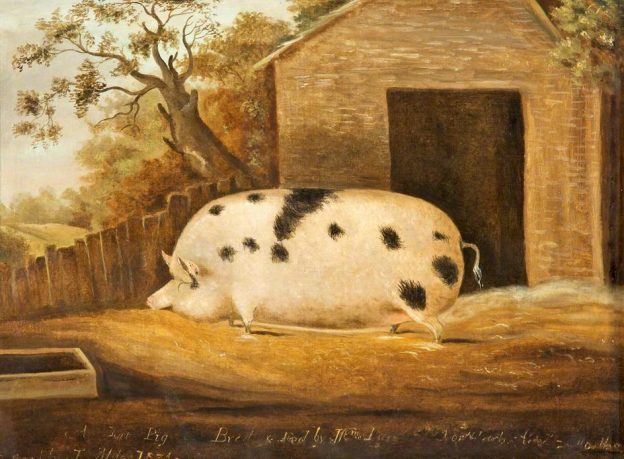
(1809) Petition of the Pigs in Kent

More info at a folk song a week blog – https://afolksongaweek.wordpress.com/2013/08/10/week-103-petition-of-the-pigs-in-kent/

Original text in 1809 magazine can be found here

Petition of the Pigs in Kent

Ye owners of woodlands, with all due submission,
We humbly beg leave to present our petition,
That you will be pleas’d to recall your decree,
Which tells us that acorns no longer are free.

In Sussex and Surrey and Middlesex too,
Pigs may ramble at large without such ado;
And why, then, in Kent should pretences be found,
To drive us like culprits and thieves to the pound,

Since we, and our fathers, and others before ‘em,
Have rang’d in your woods, with all proper decorum?
No poachers are we, for no game we annoy
No hares we entrap, and no pheasants decoy;

Contented are we, if an acorn we find,
Nor wish for a feast of a daintier kind.
Besides, we are told (and perhaps not mistaken)
That you and your friends love a slice of good bacon;

But if of good bacon you all love a slice,
If pigs are to starve, how can bacon be nice?
For these and for other wise reasons of state,
We again our petition most humbly repeat,

Ye owners of woodlands, with all due submission,
We humbly beg leave to present our petition,
That you will repeal this severest of laws,
So your woods shall resound to our grunting applause.

Singing history pdf’s by Sing London and EFDSS

Some good stuff in these PDF’s by Sing London
https://www.efdss.org/efdss-education/resource-bank/resources-and-teaching-tools/singing-histories

Just currently looking at the ‘Petition of the Pigs in Kent’ ballad from the Kent book… https://media.efdss.org/resourcebank/docs/EFDSS_Education_RecentProjects_SingingHistoriesKent.pdf

(1790*) Smile In Your Sleep by Jim McLean

Ewan McLennan just suggested this song ‘Smile In Your Sleep‘ to me, written by Jim McLean about the Highland Clearances.

Beautiful and achingly sad, I personally wonder if it needs another few verses, as I felt from The Cheviot The Stag and The Black Black Oil, that there were a number of defiant pockets of (mostly female) resistance to the Clearances which this song doesn’t touch on.

Hush, hush, time tae be sleepin
Hush, hush, dreams come a-creepin
Dreams o peace an o freedom
Sae smile in your sleep, bonnie baby

Once our valleys were ringin
Wi sounds o our children singin
But nou sheep bleat till the evenin
An shielings stand empty an broken

We stood, wi heads bowed in prayer
While factors laid our cottages bare
The flames fired the clear mountain air
An many lay dead in the mornin

Where was our fine Highland mettle,
Our men once sae fearless in battle?
They stand, cowed, huddled like cattle
Soon tae be shipped owre the ocean

No use pleading or praying
All hope gone, no hope of staying
Hush, hush, the anchor’s a-weighing
Don’t cry in your sleep, bonnie baby

Ewan MacColl – Bring The Summer Home – 1381 The Great Revolt

Peggy Seeger also sent over this track called ‘Bring The Summer Home’ from Ewan MacColl’s 1998 reissue compilation album Antiquities.

It is about the Peasants’ Revolt (or the Great Revolt as it should be know!), the 100 Year War with France, the first attempt at an English Poll Tax and the Black Death.

Someone on the Mudcat forums has a bash at working out the lyrics here – http://mudcat.org/thread.cfm?threadid=141748.

You can hear it online via this youtube mix tape…

(1999) A Place Called England by Maggie Holland

I was lucky enough to hear The Young’Uns open with ‘A Place Called England’ at a gig in Bristol last night. Here’s the original version by Maggie Holland – it won the award for Best Song at the BBC Folk Awards 1999. It’s all about gardens and English soil and has a nice reference to the diggers!

I rode out on a bright May morning like a hero in a song,
Looking for a place called England, trying to find where I belong.
Couldn’t find the old flood meadow or the house that I once knew;
No trace of the little river or the garden where I grew.

I saw town and I saw country, motorway and sink estate;
Rich man in his rolling acres, poor man still outside the gate;
Retail park and burger kingdom, prairie field and factory farm,
Run by men who think that England’s only a place to park their car.

But as the train pulled from the station through the wastelands of despair
From the corner of my eye a brightness filled the filthy air.
Someone’s grown a patch of sunflowers though the soil is sooty black,
Marigolds and a few tomatoes right beside the railway track.

Down behind the terraced houses, in between the concrete towers,
Compost heaps and scarlet runners, secret gardens full of flowers.
Meeta grows her scented roses right beneath the big jets’ path.
Bid a fortune for her garden—Eileen turns away and laughs.

So rise up, George, and wake up, Arthur, time to rouse out from your sleep.
Deck the horse with sea-green ribbons, drag the old sword from the deep.
Hold the line for Dave and Daniel as they tunnel through the clay,
While the oak in all its glory soaks up sun for one more day.

Come all you at home with freedom whatever the land that gave you birth,
There’s room for you both root and branch as long as you love the English earth.
Room for vole and room for orchid, room for all to grow and thrive;
Just less room for the fat landowner on his arse in his four-wheel drive.

For England is not flag or Empire, it is not money, it is not blood.
It’s limestone gorge and granite fell, it’s Wealden clay and Severn mud,
It’s blackbird singing from the May tree, lark ascending through the scales,
Robin watching from your spade and English earth beneath your nails.

So here’s two cheers for a place called England, sore abused but not yet dead;
A Mr Harding sort of England hanging in there by a thread.
Here’s two cheers for the crazy diggers, now their hour shall come around;
We shall plant the seed they saved us, common wealth and common ground.

Summer Youth Residency

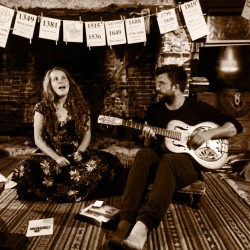
Toby and Georgie sing a duet

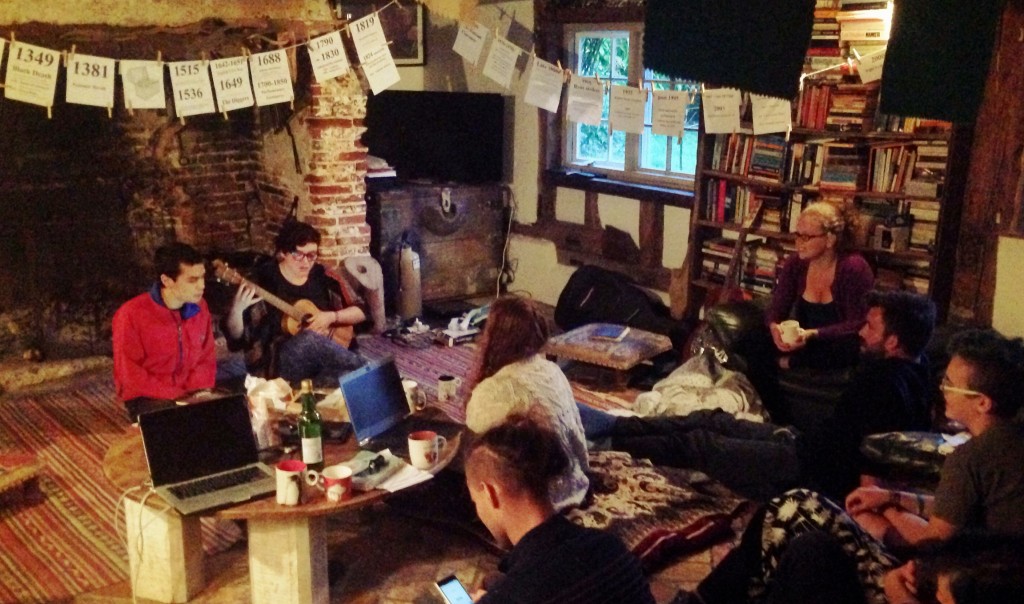
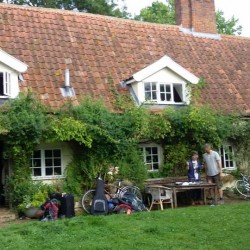
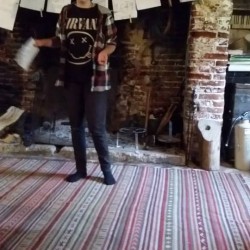
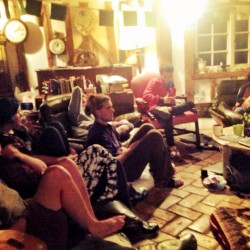
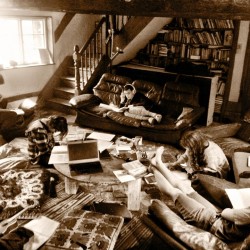
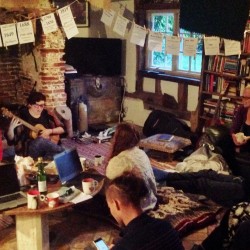
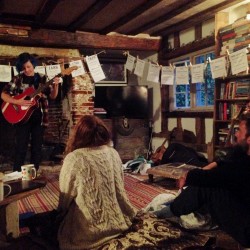
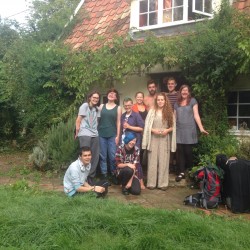
Way back in warm, sunny August, seven young people gathered somewhere in the depths of the East of England; the outskirts of a town called Diss (plenty of puns were made) in a lovely cottage, previously home to the writer Roger Deakin.

Five of us were from the youth organisation Woodcraft Folk, and we were glad to be joined by Molly and Kathleen who we hadn’t met before but quickly made friends with.

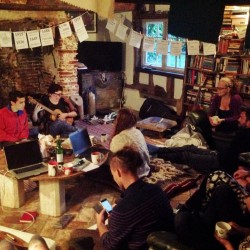
We were joined by Robin and Rachel and spent the week reading, singing and learning all about the history of our land and the struggles that have been fought for it. We listened to podcasts, taught each other songs and shared food together between practicing sections of the show ready for a performance.

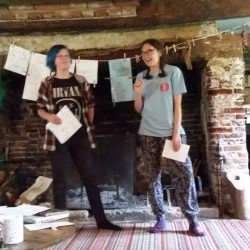
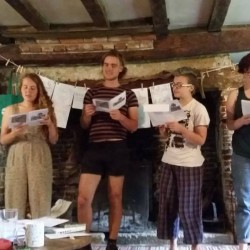
At the end of the week, we performed a full show of Three Acres and a Cow as a group, complete with poetry, sketches and, of course, singing.

Since the residency, Anna has successfully applied for funding to develop a Quaker version of the show alongside Robin, and I have been involved in various performances of the show in my new role as youth apprentice.

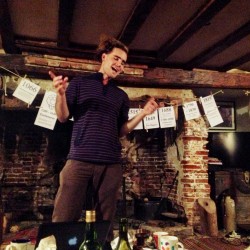
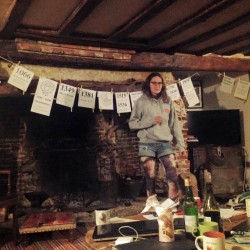
Here is a selection of photos from the week:

– Naomi, apprentice of Three Acres And A Cow

(1887) The Land Song

“The song became a Liberal radical anthem in the aftermath of David Lloyd George’s “people’s budget” of 1909 which proposed a tax in land. During the two general elections of the following year, ‘The Land Song’ became the governing Liberals’ campaign song.” (from https://en.wikipedia.org/wiki/The_Land_song)

More info can be found via – https://www.historyworkshop.org.uk/the-land-song/

Sound the blast for freedom, boys, and send it far and wide,
March along to victory, for God is on our side,
While the voice of nature thunders o’er the rising tide:
“God made the land for the people”.

The land, the land, ’twas God who made the land,
The land, the land. The ground on which we stand,
Why should we be beggars with the ballot in our hand?
God gave the land to the people.

Hark! The shout is swelling from the east and from the west!
Why should we beg work and let the landlords take the best?
Make them pay their taxes for the land, we’ll risk the rest!
The land was meant for the people.

The banner has been raised on high to face the battle din,
The army now is marching on, the struggle to begin,
We’ll never cease our efforts ’til the victory we win,
And the land is free for the people.

Clear the way for liberty, the land must all be free,
Britons will not falter in the fight tho’ stern it be.
‘Til the flag we love so well shall wave from sea to sea,
O’er the land that’s free for the people.

(1932) Manchester Rambler by Ewan MacColl

Ewan MacColl was on the first Kinder Scout trespass and wrote this amazingly catchy tune inspired by the experience.

From http://www.kindertrespass.com/

In April 1932 over 400 people participated in a mass trespass onto Kinder Scout, a bleak moorland plateau, the highest terrain in the Peak District.

The event was organised by the Manchester branch of the British Workers Sports Federation. They chose to notify the local press in advance, and as a result, Derbyshire Constabulary turned out in force. A smaller group of ramblers from Sheffield set off from Edale and met up with the main party on the Kinder edge path.

Five men from Manchester, including the leader, Benny Rothman, were subsequently jailed.

75 years later the trespass was described as: “the most successful direct action in British history” by Lord Roy Hattersley.

April 2012 saw the 80th Anniversary of the mass trespass of Kinder Scout celebrated by a week of walks, talks, and exhibitions, with a launch ceremony featuring Mike Harding, Stuart Maconie, and the leaders of major agencies involved in access to countryside. A new book was published, and commemorative posters are on sale.

The trespass is widely credited with leading to:

  • legislation in 1949 to establish the National Parks.
  • contributing to the development of the Pennine Way and many other long distance footpath.
  • securing walkers’ rights over open country and common land in the C.R.O.W. Act of 2000.

The trespass was controversial at the time, being seen as a working class struggle for the right to roam versus the rights of the wealthy to have exclusive use of moorlands for grouse shooting.

The Manchester Rambler by Ewan MacColl

I’ve been over Snowdon, I’ve slept upon Crowdon
I’ve camped by the Waynestones as well
I’ve sunbathed on Kinder, been burned to a cinder
And many more things I can tell
My rucksack has oft been me pillow the heather has oft been me bed
And sooner than part from the mountains,
I think I would rather be dead

I’m a rambler, I’m a rambler from Manchester way
I get all me pleasure the hard moorland way
I may be a wageslave on Monday but I have my freedom on Sunday

The day was just ending and I was descending
Down Grinesbrook just by Upper Tor
When a voice cried “Hey you” in the way keepers do.
He’d the worst face that ever I saw
The things that he said were unpleasant, in the teeth of his fury I said
“Sooner than part from the mountains, I think I would rather be dead”

He called me a louse and said “Think of the grouse”,
Well i thought, but I still couldn’t see
Why all Kinder Scout and the moors roundabout
Couldn’t take both the poor grouse and me
He said “All this land is my master’s”, at that I stood shaking my head
No man has the right to own mountains any more than the deep ocean bed

So I’ll walk where I will over mountain and hill
And I’ll lie where the bracken is deep
I belong to the mountains, the clear running fountains,
Where the grey rocks rise ragged & steep
I’ve seen the white hare in the gullys and the curlew fly high overhead
And sooner than part from the mountains, I think I would rather be dead.

(1840) Song On The Times

You can see an original copy of it here – http://ballads.bodleian.ox.ac.uk/static/images/sheets/20000/18540.gif

You working men of England, one moment now attend
While I unfold the treatment of the poor upon this land
For nowadays the factory lords have brought the labor low
And daily are contriving plans to prove our overthrow

So arouse you sons of freedom, the world seems upside down
They scorn the poor man as a thief in country and in town

There’s different parts in Ireland, it’s true what I do state
There’s hundreds that are starving for they can’t get food to eat
And if they go unto the rich to ask them for relief
They bang their door all in their face as if they were a thief

So arouse you sons of freedom the world seems upside down
They scorn the poor man as a thief in country and in town

Alas how altered are the times, rich men despise the poor
And pay them off without remorse quite scornful at their door
And if a man is out of work, his Parish pay is small
Enough to starve himself and wife, his children and all

So arouse you sons of freedom the world seems upside down
They scorn the poor man as a thief in country and in town

So to conclude and finish these few verses I have made
I hope to see before it’s long men for their labor paid
Then we’ll rejoice with heart and voice and banish all our woes
Before we do old England must pay us what she owes

So arouse you sons of freedom the world seems upside down
They scorn the poor man as a thief in country and in town

(1885) Three Acres And A Cow

IMG_1101

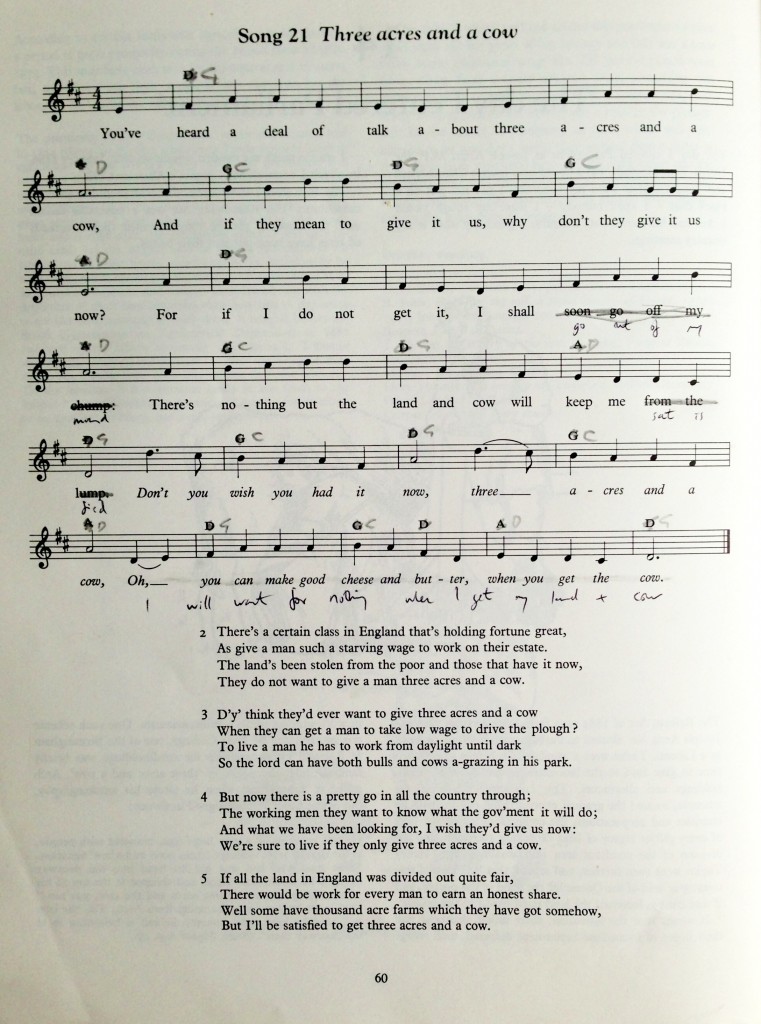
**Please note I have changed some of the lyrics and a bit of the melody – this is fine and you are welcome to change them too – that is how music works #notsacred**

You’ve heard a lot of talk about three acres and a cow
And if they mean to give us why don’t they give it now?
For if I do not get it I may go out of my mind
There’s nothing but the land and cow will keep me satisfied

Don’t you wish you had it now, three acres and a cow!
Oh you can make good cheese and butter when you get the cow.

There’s a certain class in England that is holding fortune great
Yet they give a man a starving wage to work on their estate
The land’s been stolen from the poor and those that hold it now
They do not want to give a man three acres and a cow

D’y’ think they’ll ever want to give three acres and a cow
When they can get a man to take low wage to drive the plough
To live a man he has to work from daylight until dark
So the lord can have both bulls and cattle grazing in his park

But now there is a pretty go in all the country though
The workers they all want to know what the government will do
And what we have been looking for, I wish they’d give us now
We’re sure to live if they only give three acres and a cow

If all the land in England was divided up quite fair
There would be some for everyone to earn an honest share
Well some have thousand acre farms which they have got somehow
But I’ll be satisfied to get three acres and a cow

Lyrics in the public domain
Scan taken from ‘The Painful Plough
‘ by Roy Palmer and reprinted with permission.

(1611) The Fowlers’ Complaint

The Fowlers’ Complaint (The Powtes Complaint) 1611

Come, Brethren of the water and let us all assemble
To treat upon this matter, which makes us quake and tremble;
For we shall rue, if it be true, that the Fens be undertaken,
And where we feed in Fen and Reed, they’ll feed both Beef and Bacon.

They’ll sow both beans and oats where never man yet thought it,
Where men did row in boat, ere the undertakers bought it:
But, Ceres, thou behold us now, let wild oats be their venture,
Oh let the frogs and miry bogs destroy where they do enter.

Behold the great design, which they do now determine,
Will make our bodies pine, a prey to crows and vermine:
For they do mean all Fens to drain, and waters overmaster,
All will be dry, and we must die, ’cause Essex calves want pasture.

Away with boats and rudder, farewell both boots and skatches,
No need of one nor th’other, men now make better matches;
Stilt-makers all and tanners shall complain of this distaster;
For they will make each muddy lake for Essex calves a pasture.

The feather’d fowls have wings, to fly to other nations;
But we have no such things, to aid our transportations;
We must give place (oh grievous case) to horned beasts and cattle,
Except that we can all agree to drive them out by battle.

Wherefore let us intreat our ancient water nurses,
To shew their power so great as t’ help to drain their purses;
And send us good old Captain Flood to lead us out to battle,
Then two-penny Jack, with skales on’s back, will drive out all the cattle.

This noble Captain yet was never know to fail us,
But did the conquest get of all that did assail us;
His furious rage none could assuage; but, to the world’s great wonder,
He bears down banks, and breaks their cranks and whirlygigs asunder.

God Eolus, we do pray, that thou wilt not be wanting,
Thou never said’st us nay, now listen to our canting:
Do thou deride their hope and pride, that purpose our confusion;
And send a blast, that they in haste may work no good conclusion.

Great Neptune (God of seas), this work must needs provoke thee;
They mean thee to disease, and with Fen water choke thee:
But, with thy mace, do thou deface, and quite confound this matter;
And send thy sands, to make dry lands, when they shall want fresh water.

And eke we pray thee Moon, that thou wilt be propitious,
To see that nought be done to prosper the malicious;
Though summer’s heat hath wrought a feat, whereby themselves they flatter,
Yet be so good as send a flood, lest Essex calves want water.

Song about enclosure of land in the Fens from 1611. Lyrics in the
public domain – taken from ‘A Ballad History Of England’ by Roy Palmer.

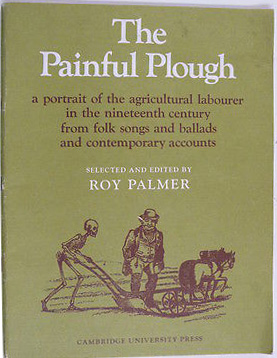
The Painful Plough by Roy Palmer

ppThe Painful Plough
by Roy Palmer

The full title is ‘The Painful Plough: A Portrait of the Agricultural Labourer in the Nineteenth Century from Folksongs and Ballads and Contemporary Accounts’ which pretty much does the job.

It tells the story of Joseph Arch, a farm labourer who went on to start one of the first agricultural labourers unions and eventually to become an MP.

A superb piece of work and a huge source of inspiration for the concept of the show ‘Three Acres And A Cow’.

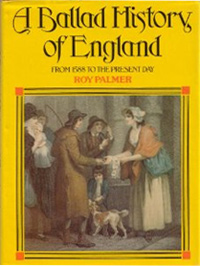
A Ballad History of England by Roy Palmer

rp---bhA Ballad History of England
by Roy Palmer

Roy Palmer has spent much of the last thirty years hunting for ballads and using them to weave together a people’s history of England. He has mastered the art of this in a number of excellent books of which this is a great starting point.

This book is utterly superb and should be bought without hesitation. Each song has a melody and words, along with a page or two giving its historical context.